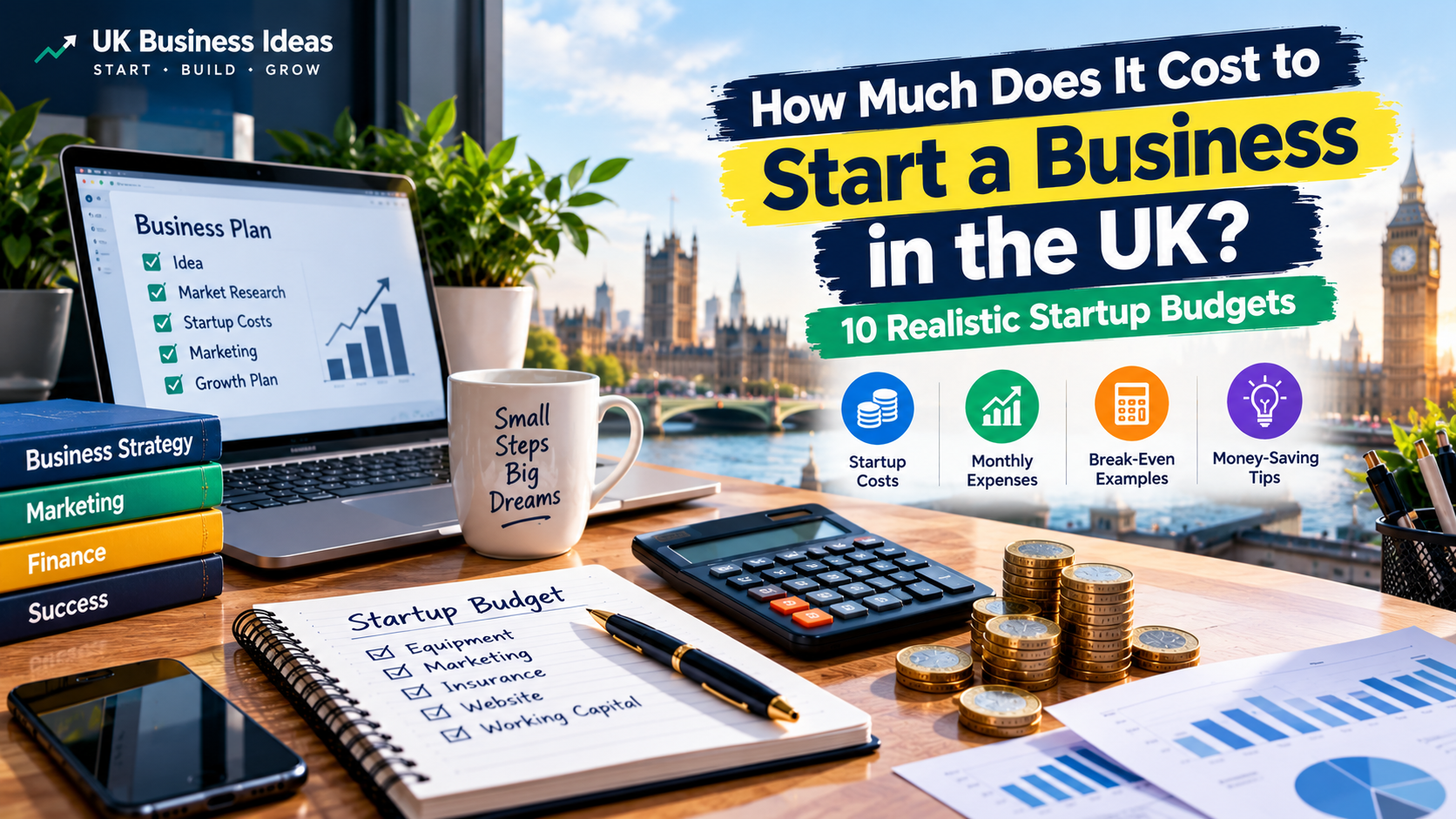
Starting a business is exciting, but one question often comes first: how much money will you actually need? The answer depends on what you sell, whether you work from home, the equipment you need and how quickly you can find paying customers.
In this guide, we break down the estimated cost of starting 10 common types of small businesses in the UK. You will also learn about monthly expenses, hidden costs, break-even planning and practical ways to protect your budget.
Important: All figures in this article are illustrative planning estimates, not quotes or guaranteed costs. Prices vary by location, supplier, experience, insurance, equipment and legal requirements. Obtain current quotes before committing money.
Quick Answer: How Much Does It Cost to Start a Business in the UK?
Some home-based service businesses can be tested with a few hundred pounds, while businesses that need specialist equipment, premises or stock can require several thousand pounds or more. There is no single startup cost that applies to every business.
The most useful approach is to calculate three separate amounts: your one-off setup costs, your regular monthly running costs and the cash reserve you need while building a customer base.
10 Business Ideas and Their Estimated Startup Costs
| Business type | Estimated startup budget | Typical monthly costs |
|---|---|---|
| Freelance services | £0–£500 | £20–£150 |
| Virtual assistant | £0–£400 | £20–£150 |
| Domestic cleaning | £150–£800 | £80–£350 |
| Social media management | £50–£600 | £30–£250 |
| Online shop | £300–£2,000 | £50–£400, excluding stock replenishment |
| Handmade products | £150–£1,000 | £50–£300, excluding larger material purchases |
| Mobile car valeting | £300–£2,000 | £100–£500 |
| Gardening services | £200–£1,500 | £100–£500 |
| Tutoring | £50–£500 | £20–£200 |
| Small food business | £300–£2,500 | £100–£600, excluding variable ingredient costs |
These ranges assume a small-scale launch rather than a rented shop, commercial premises or a large team. Some activities may cost more once specialist training, licences, insurance, transport or professional equipment are included.
1. Freelance Services: Estimated Startup Cost £0–£500
Freelancing can be an affordable way to begin if you already have a useful skill. Examples include writing, proofreading, graphic design, basic web design, research and technical support within your expertise.
Example startup budget
- Computer or equipment upgrades: £0–£200
- Website, domain or portfolio: £20–£100
- Software and online tools: £0–£100
- Initial marketing and networking: £0–£100
If you already own suitable equipment, you may be able to start with very little spending. Create sample work, choose a specific service and contact businesses that could benefit from it.
2. Virtual Assistant Business: Estimated Startup Cost £0–£400
Virtual assistants help businesses with tasks such as scheduling, email management, research, document preparation and customer enquiries. This can be suitable for someone with strong organisation and communication skills.
Example startup budget
- Computer and accessories: £0–£150
- Website or portfolio: £20–£80
- Productivity software: £0–£70
- Marketing and contingency: £50–£100
Start with a clear list of services and agree on working hours, deadlines, confidentiality and payment terms. Avoid buying expensive software before you know what clients require.
3. Domestic Cleaning: Estimated Startup Cost £150–£800
A small cleaning service can start with basic supplies and a limited service area. Your actual budget will depend on the type of cleaning offered, the equipment you already own and how you travel between customers.
Example startup budget
- Cleaning equipment and supplies: £60–£200
- Protective equipment: £20–£50
- Insurance allowance: £50–£200
- Marketing and transport reserve: £20–£150
Use products safely, follow manufacturers' instructions and check insurance requirements. Price each job after accounting for travel, supplies, unpaid administration and the time needed to complete the work.
4. Social Media Management: Estimated Startup Cost £50–£600
Small businesses may need help planning content, preparing posts and responding to their online community. You can begin with a small portfolio and a focused service package.
Example startup budget
- Design or scheduling tools: £0–£150
- Website and portfolio: £20–£100
- Training or skills development: £0–£200
- Marketing and contingency: £30–£150
Offer clear deliverables, such as a monthly content calendar or a defined number of posts. Do not promise viral results or guaranteed revenue. Obtain permission to use client logos, photographs and account information.
5. Online Shop: Estimated Startup Cost £300–£2,000
An online shop can sell physical products through your own website or a marketplace. The largest cost differences often come from inventory, product samples, packaging and delivery rather than the website alone.
Example startup budget
- Initial product stock or samples: £100–£800
- Website or marketplace setup: £30–£200
- Packaging and labels: £30–£150
- Product photography and listings: £20–£150
- Marketing and cash reserve: £120–£700
Test a small range before ordering large quantities. Calculate the full cost of each sale, including delivery, transaction fees, refunds, damaged items and customer service. Check product safety and consumer protection obligations.
6. Handmade Products: Estimated Startup Cost £150–£1,000
If you make jewellery, personalised gifts, artwork, home decorations or similar products, start with a small collection and test customer interest before expanding.
Example startup budget
- Tools and materials: £50–£350
- Packaging: £20–£100
- Product photography and listings: £20–£100
- Market stall or platform costs: £20–£150
- Reserve for restocking: £40–£300
Include the value of your time when calculating prices. Check relevant product safety and labelling requirements, especially for products intended for children, cosmetics or items that come into contact with food.
7. Mobile Car Valeting: Estimated Startup Cost £300–£2,000
Mobile car valeting involves cleaning vehicles at customers' homes or workplaces. A basic service may require less equipment than a business offering machine polishing, specialist detailing or advanced treatments.
Example startup budget
- Cleaning equipment and chemicals: £100–£500
- Vacuum and other tools: £80–£350
- Protective equipment: £20–£70
- Insurance and business-use vehicle allowance: £50–£500
- Marketing and operating reserve: £50–£580
Check your vehicle insurance, public liability cover, water use and wastewater disposal arrangements. If you need a van, specialist equipment or premises, your budget may be considerably higher.
8. Gardening Services: Estimated Startup Cost £200–£1,500
Gardening services can include weeding, lawn care, planting and general garden maintenance. You may be able to start with hand tools and expand your equipment as demand grows.
Example startup budget
- Hand tools and basic equipment: £80–£300
- Power tools, if needed: £100–£500
- Safety equipment: £30–£100
- Insurance and transport reserve: £100–£400
Check tool safety and insurance requirements. Consider the costs of transporting equipment and green waste. Do not offer specialist tree work or pesticide application without the necessary competence and approvals.
9. Tutoring: Estimated Startup Cost £50–£500
Tutoring can be started online or in person if you have suitable subject knowledge and can explain it clearly. You may need a computer, reliable internet, teaching materials and a suitable workspace.
Example startup budget
- Headset, webcam or equipment: £20–£120
- Learning materials: £10–£80
- Website or profile: £20–£100
- Marketing and contingency: £0–£200
Choose an age group and subject, prepare a sample lesson and explain your experience honestly. When working with children, check safeguarding expectations and whether an appropriate DBS check is required for your circumstances.
10. Small Food Business: Estimated Startup Cost £300–£2,500
A small food business might sell baked goods, prepared products or made-to-order treats. Costs vary considerably depending on the product, kitchen facilities, equipment, packaging and food safety requirements.
Example startup budget
- Ingredients and initial stock: £50–£250
- Equipment and utensils: £100–£800
- Packaging and labels: £30–£150
- Food safety training and compliance allowance: £20–£200
- Marketing and contingency: £100–£1,100
Before trading, check food business registration with your local authority, hygiene rules, allergen information and any relevant permissions. Registration is generally required at least 28 days before starting a food business; confirm the rules with the Food Standards Agency and your local council.
What Other Costs Should You Budget For?
Startup equipment is only one part of the total. Many businesses also need to budget for the following costs.
| Cost category | What to consider |
|---|---|
| Registration and administration | Business structure, filing fees where applicable and professional advice |
| Insurance | Cover appropriate to your work, customers, equipment and vehicles |
| Website and software | Domain renewal, hosting, subscriptions and payment processing |
| Marketing | Promotional materials, advertising, photography and networking |
| Transport | Fuel, public transport, parking, deliveries and vehicle use |
| Stock and materials | Replacement stock, packaging, ingredients and supplier minimum orders |
| Tax reserve | Money set aside for tax and other applicable liabilities |
| Contingency | Unexpected repairs, refunds, delayed payments and price changes |
Do not assume that every business needs every item. Equally, do not leave out a cost simply because it is inconvenient. Obtain quotes and make a budget specific to your activity.
How Much Money Do You Need Each Month?
Your monthly running costs are the expenses you pay to keep the business operating. They may include software, insurance, transport, advertising, supplies, payment fees and premises costs.
For a small home-based service business, you might initially plan for £50–£300 per month in basic operating costs. A product business or a mobile service with substantial transport and materials costs may need much more. These are illustrative ranges, not typical costs for every business.
Keep personal living expenses separate from business expenses. If you depend on the business to pay your rent and bills, work out how long you can manage while sales are uncertain. A business can be profitable on paper but still run out of cash if customers pay late.
How to Calculate Your Break-Even Point
Break-even is the point where your sales cover your costs. It does not mean you are earning a personal salary or have paid all taxes.
Break-even sales volume = Fixed costs ÷ (Selling price per sale − Variable cost per sale)
For example, imagine you provide a service for £60 per booking. Each booking costs £15 in travel and materials, leaving £45 to contribute towards fixed costs. If your fixed monthly business costs are £225, your break-even point is five bookings per month.
Calculation: £225 ÷ (£60 − £15) = 5 bookings.
This example excludes your personal living expenses, income tax, National Insurance, and any other costs not included in the assumptions. Include those items when planning how much you need to earn.
A Practical Startup Budget Example: £1,000
Here is one way to allocate a £1,000 starting budget for a small service business. Change the amounts to reflect your own quotes and requirements.
| Item | Planned amount |
|---|---|
| Essential equipment | £250 |
| Training and skill development | £100 |
| Insurance and compliance allowance | £150 |
| Website and marketing | £100 |
| Initial transport and supplies | £100 |
| Cash reserve | £300 |
| Total | £1,000 |
This is a planning example, not a recommendation to spend every pound immediately. If insurance, training or equipment costs more than expected, reduce optional spending or choose a different business model rather than ignoring essential requirements.
How to Reduce Startup Costs Without Cutting Corners
- Start with one service: Offer a focused service before expanding into more expensive options.
- Use what you already own: Check whether your existing equipment is suitable and safe.
- Validate demand first: Speak to prospective customers before ordering large amounts of stock.
- Compare suppliers: Check quality, delivery, warranties and ongoing costs rather than choosing only by price.
- Use free tools where practical: Start with suitable free business, design or accounting tools and upgrade when necessary.
- Keep a cash reserve: Avoid committing all available money to equipment or advertising.
- Track every expense: Review spending regularly and stop paying for tools or services you do not use.
UK Registration, Tax and Legal Considerations
Your business structure affects registration, record-keeping, tax and legal responsibilities. The official GOV.UK guide to setting up a business explains the main options, including sole trader and limited company arrangements.
If you operate as a sole trader, you generally need to register for Self Assessment if your gross trading income exceeds £1,000 in a tax year, subject to applicable rules and exceptions. This is a tax threshold, not the amount it costs to start a business. Read the official sole trader registration guidance.
For most businesses, VAT registration is required when taxable turnover exceeds £90,000 over the relevant 12-month period or when the applicable forward-looking test is met. Different rules can apply in specific circumstances, so check the current HMRC VAT registration guidance.
Some activities require specific licences, permissions, training or insurance. Check the GOV.UK licence finder and your local authority before trading. If you are self-employed, HMRC also explains which costs may count as allowable business expenses in its official expenses guidance.
This article provides general information, not personalised financial, legal or tax advice. Rules and fees can change, so confirm current requirements before making decisions.
Frequently Asked Questions
What is the cheapest business to start in the UK?
Some freelance services, virtual assistance and tutoring businesses can be tested with a small budget if you already have the necessary equipment and skills. The cheapest option for you depends on what you can offer and the requirements of your chosen activity.
Can I start a business with £500?
It may be possible to test certain home-based or service businesses with £500. Prepare a realistic budget, check essential costs first and keep some money available for unexpected expenses.
Do I need a business bank account?
A separate account can make bookkeeping easier. Limited companies generally need to keep company finances separate from their owners' personal finances. Sole traders should check account terms and their own circumstances before choosing an account.
Do I need to pay tax in my first year?
Tax depends on your business structure, income, allowable expenses and wider circumstances. Keep records from the beginning and check HMRC guidance so you understand your reporting and payment responsibilities.
How much should I save before launching?
There is no universal amount. Add your essential setup costs, several months of expected business expenses where possible, and any personal living-cost reserve you need. The right amount depends on your risks, income and responsibilities.
How long does it take for a new business to make a profit?
There is no guaranteed timeline. Demand, pricing, costs, competition and repeat customers all affect the result. Monitor your sales and cash flow rather than relying on optimistic forecasts.
Final Thoughts
The cost of starting a business in the UK depends on the business you choose and how carefully you plan. Some people can test a service with existing equipment and a modest budget; others need more money for stock, specialist tools, premises or compliance.
Before spending, write down your one-off costs, monthly expenses, expected price per sale and the number of customers you need to break even. Test demand on a small scale, keep accurate records and build your business around evidence rather than assumptions.
Explore more practical startup guides and business planning tools at UK Business Ideas to help you compare opportunities and plan your next steps.