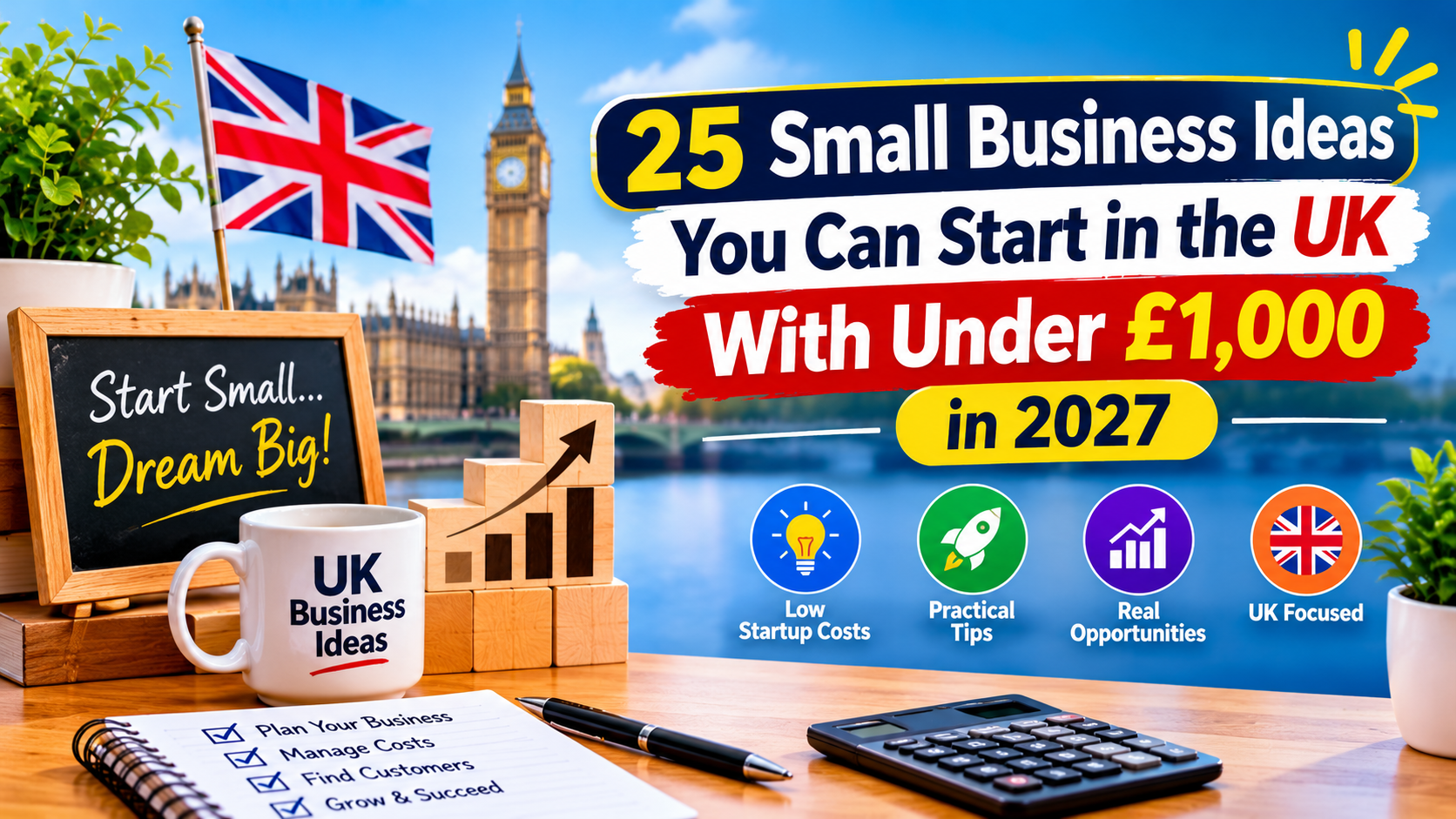
Starting a business does not have to mean spending thousands of pounds before you make your first sale. In the UK, many small businesses can begin with basic equipment, skills you already have and a clear plan for finding customers.
This guide explores 25 small business ideas you could investigate with a budget of under £1,000 in 2027. You will find estimated startup costs, practical tips and advice on choosing an idea that fits your skills and circumstances.
Important: The costs below are planning estimates, not supplier quotes. Your actual spending will depend on your location, equipment, training, insurance, licences and business model. Some ideas may exceed £1,000 if you need specialist equipment or qualifications.
What Should You Consider Before Starting?
Before spending your money, identify a specific customer, check whether people will pay for your service and calculate your ongoing expenses. Starting small and testing demand can help you avoid buying equipment or stock you do not need.
- Choose an idea that matches your skills and available time.
- Research local competitors and speak to potential customers.
- Separate your startup budget from money needed for personal expenses.
- Check relevant permissions, qualifications, tax requirements and insurance.
- Keep records of business income and expenses from the beginning.
25 Small Business Ideas You Can Start in the UK With Under £1,000
1. Domestic Cleaning Service
Estimated startup budget: £100–£500. Start with essential cleaning supplies, protective equipment and basic marketing. Offer regular home cleaning or one-off deep cleans. Ask early customers for honest reviews and referrals. Check insurance and safe handling requirements before taking on work.
2. Freelance Writing
Estimated startup budget: £0–£300. If you write clearly, offer blog articles, website copy, product descriptions or newsletters. Build a small portfolio with original samples and contact businesses in a niche you understand. A computer and internet connection may be enough to begin.
3. Social Media Management
Estimated startup budget: £50–£400. Help small businesses plan posts, create content and organise their social media calendars. Learn the platforms you intend to manage, prepare sample content and offer a clearly defined service package. Never promise guaranteed sales or followers.
4. Tutoring
Estimated startup budget: £50–£300. Teach a subject or skill you know well, either online or in person. Start with one subject and a clear lesson plan. If you work with children, check safeguarding expectations and whether an appropriate DBS check is needed for your circumstances.
5. Virtual Assistant Services
Estimated startup budget: £0–£300. Provide remote administrative help such as diary management, email organisation, research or document formatting. Choose services you can deliver reliably, protect client information and agree on tasks and payment terms in writing.
6. Mobile Car Valeting
Estimated startup budget: £250–£900. Offer basic vehicle cleaning using suitable equipment and products. Start with a limited service menu and check local demand. Consider public liability cover, vehicle insurance for business use and rules about wastewater disposal before operating.
7. Gardening and Lawn Care
Estimated startup budget: £150–£800. Begin with manageable jobs such as weeding, lawn mowing or garden tidy-ups. Buying second-hand equipment may reduce costs. Check tool safety, transport requirements and insurance, and avoid offering specialist tree work without suitable training.
8. Pet Sitting or Dog Walking
Estimated startup budget: £50–£400. Help pet owners who need support while working or travelling. Build trust through references, clear care instructions and reliable communication. Check relevant local rules, insurance and whether your particular service requires a licence.
9. Handmade Gifts
Estimated startup budget: £100–£600. Make personalised cards, decorations, gifts or accessories in small batches. Test a few products before purchasing large quantities of materials. Calculate packaging, postage, marketplace fees and your time when setting prices.
10. Print-on-Demand Products
Estimated startup budget: £50–£400. Create original designs for products such as T-shirts, mugs or posters using a print-on-demand supplier. You generally avoid holding large amounts of stock, but samples, platform fees and marketing can still cost money. Use artwork you own or have permission to sell.
11. Reselling Second-Hand Items
Estimated startup budget: £100–£700. Research demand for used books, clothing, furniture or other suitable products. Begin with a small budget and calculate buying costs, cleaning, packaging, delivery, platform fees and returns. Check product safety and accurately describe item condition.
12. CV and Cover Letter Writing
Estimated startup budget: £0–£250. Help jobseekers present their experience clearly and tailor applications to relevant vacancies. Offer editing, formatting and proofreading based on the information clients provide. Protect personal data and never invent qualifications or work experience.
13. Basic Website Setup
Estimated startup budget: £50–£500. Build simple websites for local businesses using tools you understand. Prepare example layouts, agree on the project scope and explain ongoing hosting or maintenance costs. Learn about accessibility, security, privacy and website performance before taking on complex projects.
14. Graphic Design
Estimated startup budget: £0–£400. Create flyers, social media graphics, menus or simple brand materials. Develop a portfolio of original work and specify how many revisions clients receive. Check software licensing and ensure clients have rights to any assets used.
15. Photography for Local Businesses
Estimated startup budget: £200–£900. If you already own a suitable camera or smartphone, offer product, property or social media photography. Build a sample portfolio and learn basic editing. Obtain permission before photographing people or using images for promotional purposes.
16. Home Baking
Estimated startup budget: £150–£800. Explore cakes, biscuits or celebration treats made to order. Calculate ingredient, packaging, energy and delivery costs. Before selling food, check food business registration, hygiene requirements, allergen information and any relevant permissions with your local authority.
17. Clothing Alterations and Repairs
Estimated startup budget: £100–£600. If you can sew, offer simple repairs, hemming and alterations. Start with jobs within your ability and explain turnaround times clearly. A sewing machine, essential tools and suitable workspace may be needed.
18. House Clearance and Decluttering Help
Estimated startup budget: £100–£700. Help customers organise rooms, sort belongings or prepare items for donation and resale. Set clear boundaries about lifting, transport and waste removal. Check whether you need waste carrier registration or other permissions before transporting or disposing of waste.
19. Mobile Bicycle Repair
Estimated startup budget: £200–£900. If you have the relevant mechanical skills, offer basic bicycle maintenance and repairs. Invest in suitable tools and safety training, and work only on repairs you can complete competently. Start with a defined service list and transparent prices.
20. Computer and Tech Support
Estimated startup budget: £100–£700. Help customers with basic setup, software installation, device configuration and troubleshooting within your expertise. Protect customer data, obtain permission before accessing devices and never promise to recover data unless you have the appropriate skills.
21. Online Language Lessons
Estimated startup budget: £0–£250. Teach a language you speak well or help learners practise conversation. Offer structured sessions for a particular audience and use a reliable video platform. Make your qualifications and experience clear to prospective students.
22. Event Decoration
Estimated startup budget: £150–£800. Create simple decorations for birthdays, small celebrations and community events. Start with reusable items and a limited range of packages. Account for transport, storage, setup time and venue safety requirements.
23. Local Business Lead Research
Estimated startup budget: £0–£300. Help businesses research potential customers, relevant companies or market opportunities using lawful, appropriate sources. Deliver organised, accurate reports. Follow data protection and electronic marketing rules, and avoid collecting or sharing personal information unlawfully.
24. Personalised Digital Products
Estimated startup budget: £0–£250. Create original planners, templates, checklists or printable learning materials. Choose a clear audience and solve a specific problem. Check marketplace fees, copyright, accessibility and the terms that apply to digital downloads.
25. Local Errand and Non-Medical Assistance Service
Estimated startup budget: £50–£400. Offer suitable services such as shopping collection, appointment accompaniment or everyday errands. Agree on responsibilities and payment in advance. Consider safeguarding, appropriate insurance and vehicle cover where relevant. Do not offer regulated care or medical services without the necessary authorisation.
How to Choose the Best Idea for You
The cheapest business is not automatically the best business. Choose an idea based on the customers you can reach, your existing skills and whether the numbers make sense.
- If you need to start with very little money: consider writing, virtual assistance or tutoring if you already have the required skills.
- If you prefer practical work: investigate cleaning, gardening or bicycle repair, depending on your equipment and experience.
- If you enjoy creative work: explore handmade gifts, graphic design or digital products.
- If you want to work online: consider website setup, social media management or remote administrative services.
A Simple £1,000 Startup Budget Example
Here is an illustrative budget for a small service business. It is an example for planning, not a quotation or a guarantee that every business can launch for this amount.
- Basic equipment and supplies: £250
- Training or skill development: £100
- Insurance and compliance allowance: £150
- Website and marketing materials: £100
- Transport and operating expenses: £100
- Contingency reserve: £300
Total planned budget: £1,000. Adjust each amount to your business. Some activities require specialist training, licences, additional insurance or more expensive equipment, so check these costs before committing.
How to Find Your First Customers
- Speak to people who fit your target customer profile and ask what they need.
- Create a simple portfolio or clear list of services.
- Ask satisfied customers for honest reviews and referrals.
- Build a professional website or business profile where appropriate.
- Contact relevant local businesses personally and explain how you can help.
- Track enquiries, sales and expenses so you can see which methods work.
Focus on delivering a reliable service rather than spending your entire budget on advertising. Your first goal is to prove that customers are willing to pay for what you offer.
Important UK Business and Legal Checks
Before launching, check the rules that apply to your activity and business structure. The official GOV.UK business setup guide explains the main options.
If you operate as a sole trader, you generally need to register for Self Assessment if your gross trading income exceeds £1,000 in a tax year, subject to the applicable rules and exceptions. Read the official HMRC sole trader registration guidance and keep appropriate records.
Some activities require licences, registration or qualifications. Check the GOV.UK licence finder and your local council where relevant. If you work from home, review the official guidance on running a business from home.
Insurance needs depend on the activity. Read the official business insurance guidance. Employers' liability insurance is legally required for many employers, subject to exemptions, and business vehicle use may require appropriate motor insurance.
Frequently Asked Questions
Can I really start a business in the UK with under £1,000?
Yes, some service and online businesses can begin with less than £1,000, particularly if you already have the required skills and equipment. Your actual costs will depend on your business model, compliance requirements and how you find customers.
Which business is easiest for a beginner?
There is no single easiest option for everyone. A service based on skills you already have may be simpler to test than a business requiring stock, premises or specialist equipment.
Can I start a business while working full-time?
In many cases, yes. Check your employment contract for restrictions, avoid conflicts of interest and make sure you can meet customer commitments outside your working hours.
Do I need to register my business immediately?
It depends on your business structure and circumstances. Sole traders can generally begin trading without registering first, but Self Assessment registration is required when the relevant conditions are met. Limited companies must be registered with Companies House. Check current official guidance for your situation.
How long will it take to make a profit?
There is no reliable universal timeline. Profit depends on pricing, demand, expenses, competition and repeat business. Prepare a realistic forecast and measure actual results rather than relying on guaranteed income claims.
Final Thoughts
Starting a small business is easier to approach when you break the process into manageable steps. Choose one idea, research real customer demand, calculate the costs and test your service on a small scale before investing more money.
You do not need to launch all 25 ideas. You need to find one that matches your abilities, solves a real problem and can operate sustainably. Start with a clear plan, keep accurate records and improve your offer using customer feedback.
At UK Business Ideas, our aim is to help aspiring entrepreneurs make informed decisions with practical guides, useful tools and realistic planning advice.